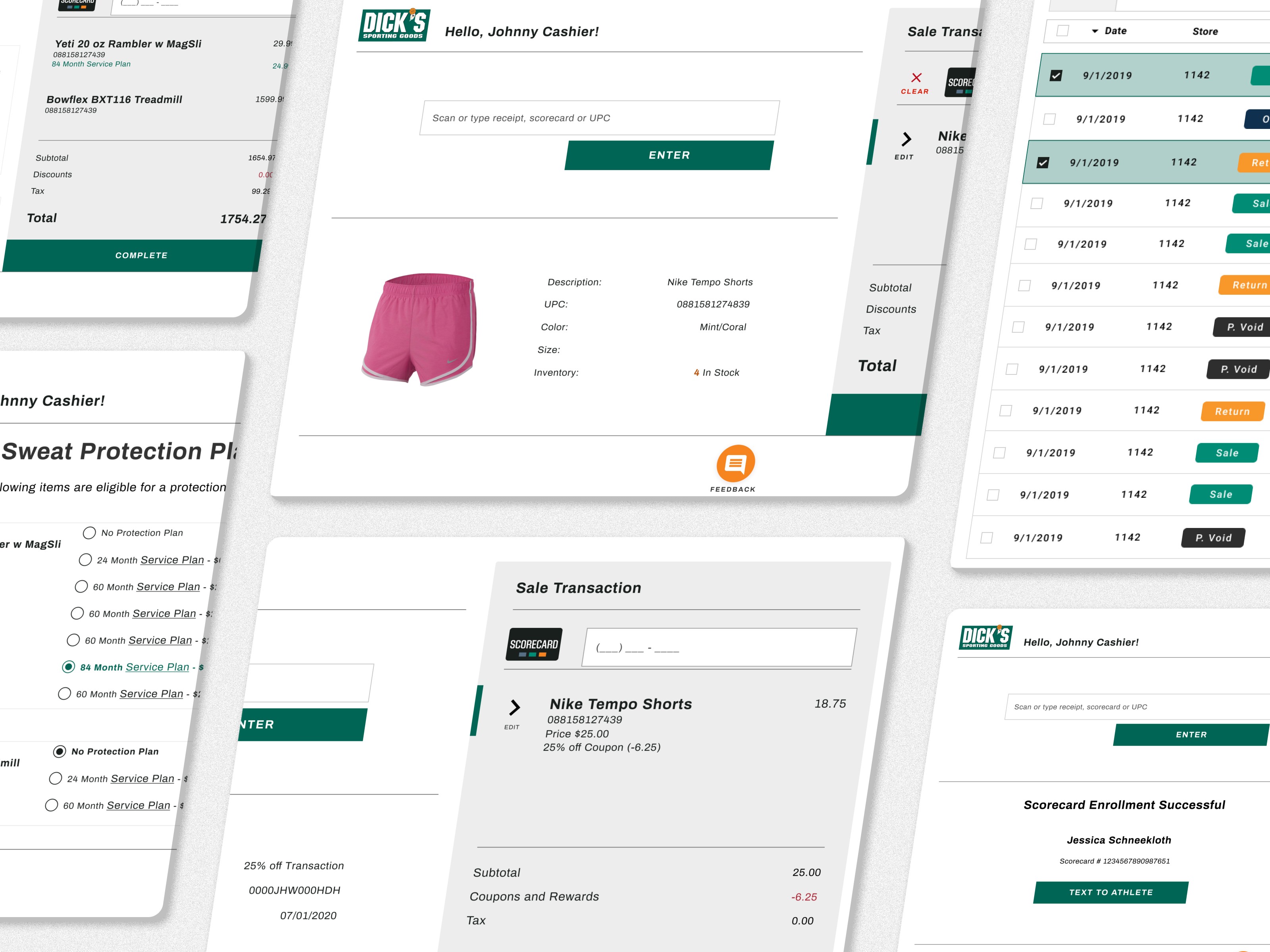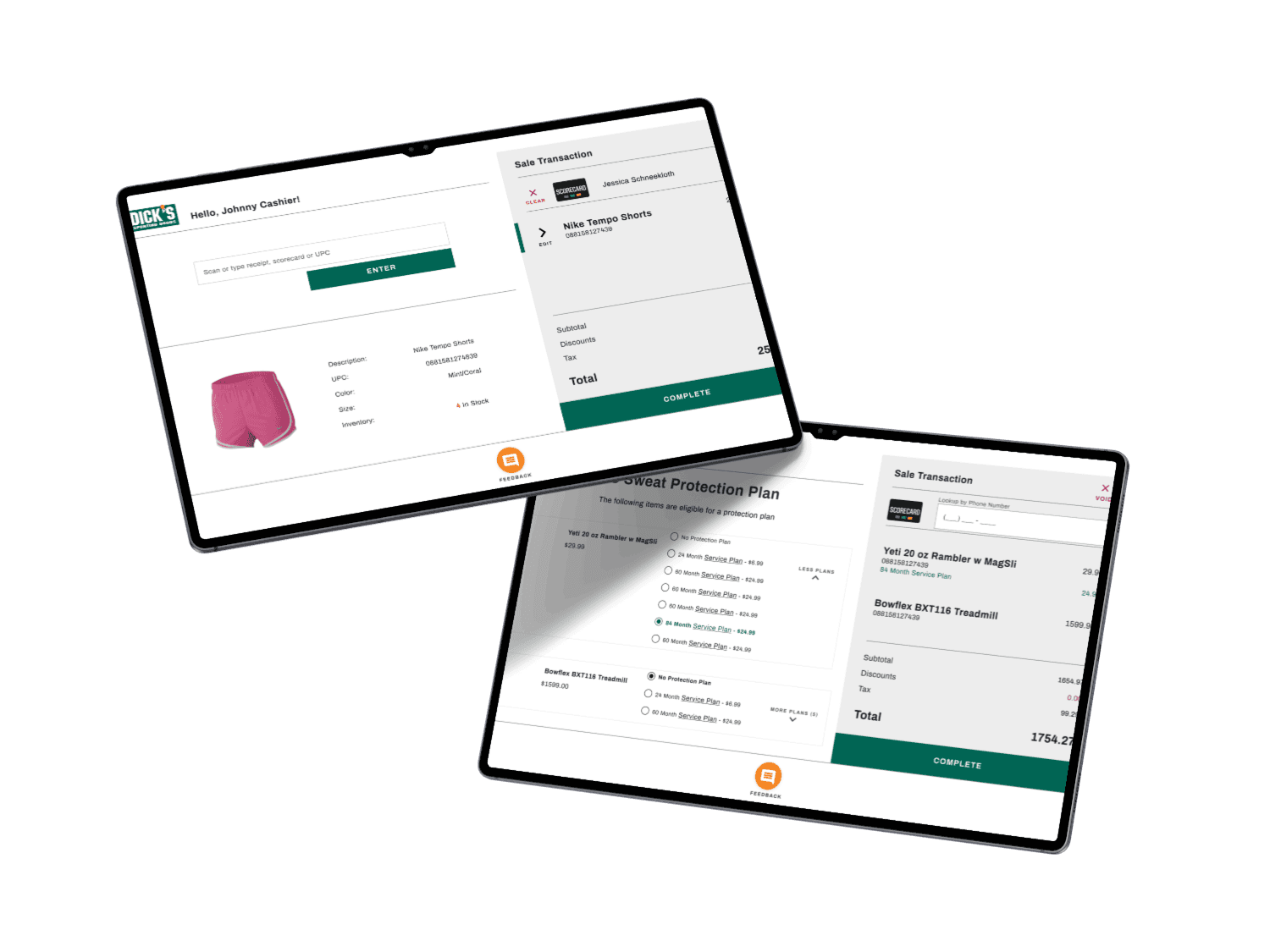
Dick's Sporting Goods needed to replace their third-party POS system . The 3rd party vendor's complicated codebase prevented the business from responding to market conditions, measuring marketing effectiveness, or iterating on customer experience. We had to rebuild everything in house without impacting day to day store sales volume.
My Role: As the sole designer, I defined the product vision, led research across 850+ stores, designed every transaction flow, partnered with engineering on technical architecture, and established the pilot-to-national rollout strategy.
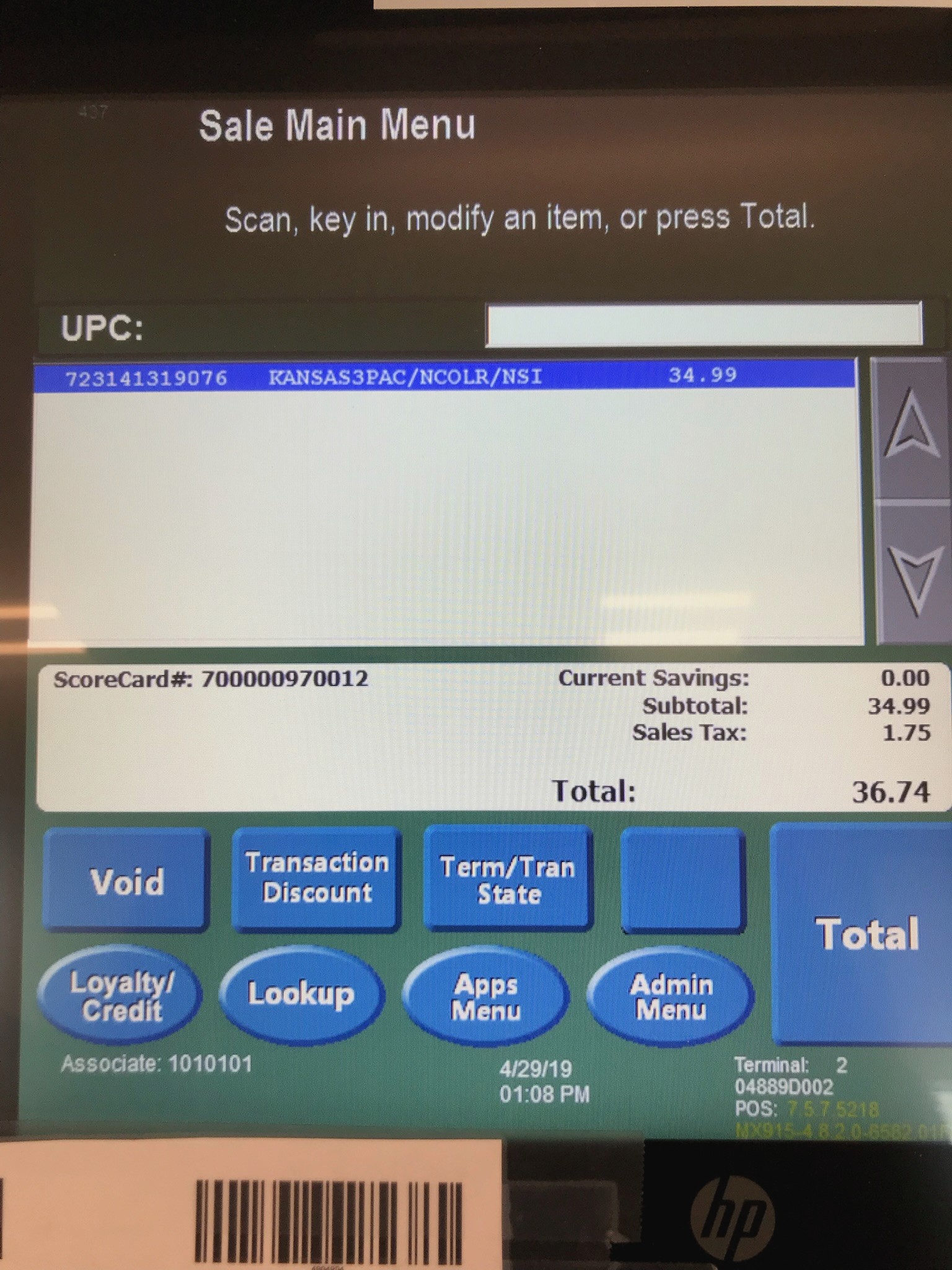
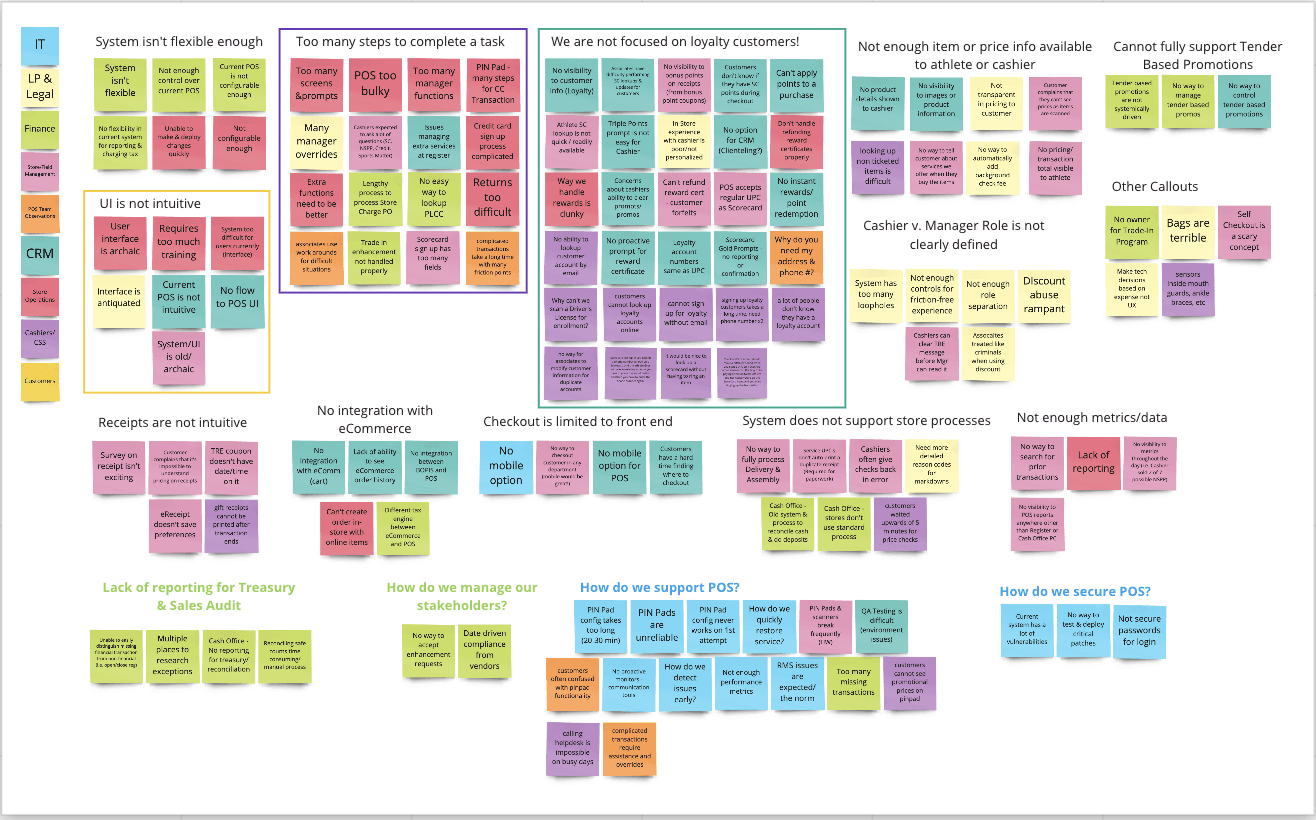
I conducted 100+ interviews with stakeholders, store managers, and cashiers, plus 2 weeks shadowing cashiers across multiple stores.
The Goal: Understand how the POS functioned as an organizational tool across completely different user needs.
Key insight: Product images and rich descriptions weren't just for checkout verification - they were essential across every store function, from inventory lookup to returns processing to loss prevention. This shaped the entire platform architecture.
Instead of replicating legacy features, I designed a flexible platform with two zones: a persistent core (always-available product entry) and an adaptive context (flexible container that changes based on task). This architecture let us start with cash sales to validate the core interaction model, then prove it could scale to credit cards, returns, inventory lookup, loyalty enrollment, and warranty sales.
Strategic sequencing: Start with highest stakes, fewest dependencies. Validate before scaling.
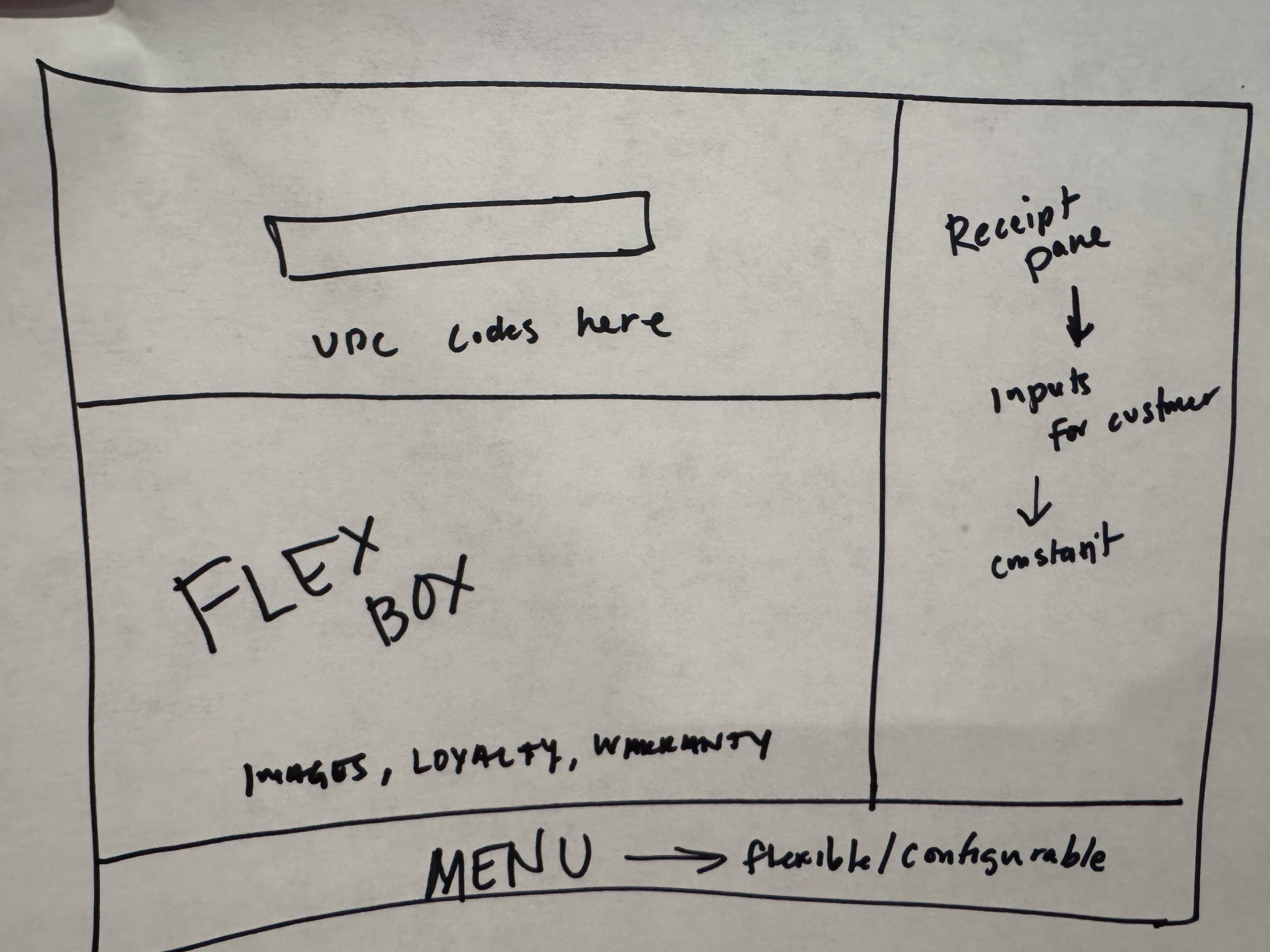
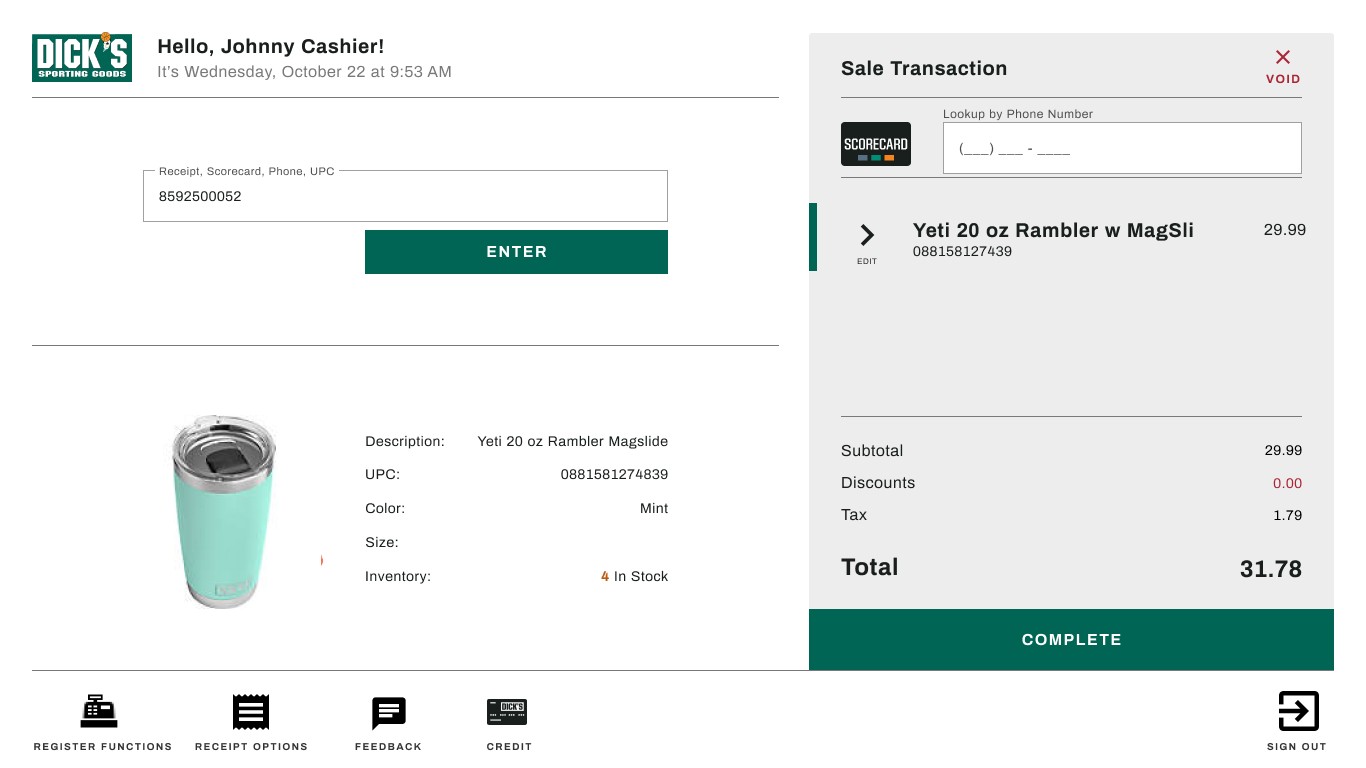
Design & Validation
I led week-long design sprints to map cash sale journeys and pressure-test the architecture. Took prototypes into real stores for usability testing with cashiers. Identified friction points iterated, and validated improvements across multiple locations
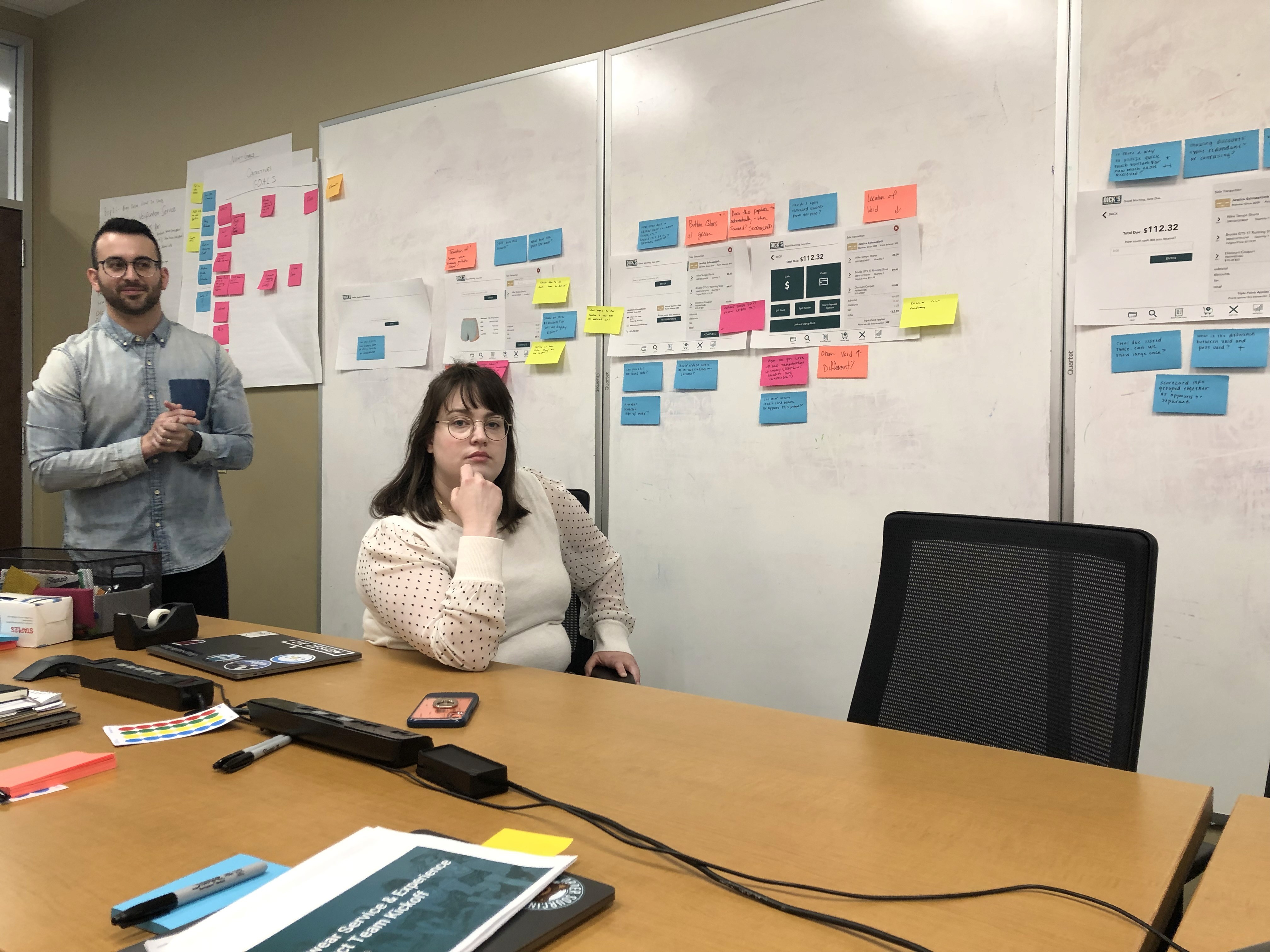
Technical Partnership
Worked closely with engineering to influence backend architecture: configurable business rules, real-time data access (so product info could serve multiple contexts), and audit-based permissions (replacing security theater with actual accountability).
1 register, 1 store
Validated: Core interaction model and split-screen architecture
Learned: Limited functionality hindered adoption - needed more transaction types
10 stores nationwide
Added: Payment types and warranties
Proved: Platform could handle multiple payment flows and complex context
850+ stores
Full feature set: Returns, inventory, loyalty operations
Result: Platform architecture scaled to every store function
The platform architecture proved it could support every store function. What began as cash sale validation expanded to returns processing, inventory management, loyalty enrollment, and warranty sales.
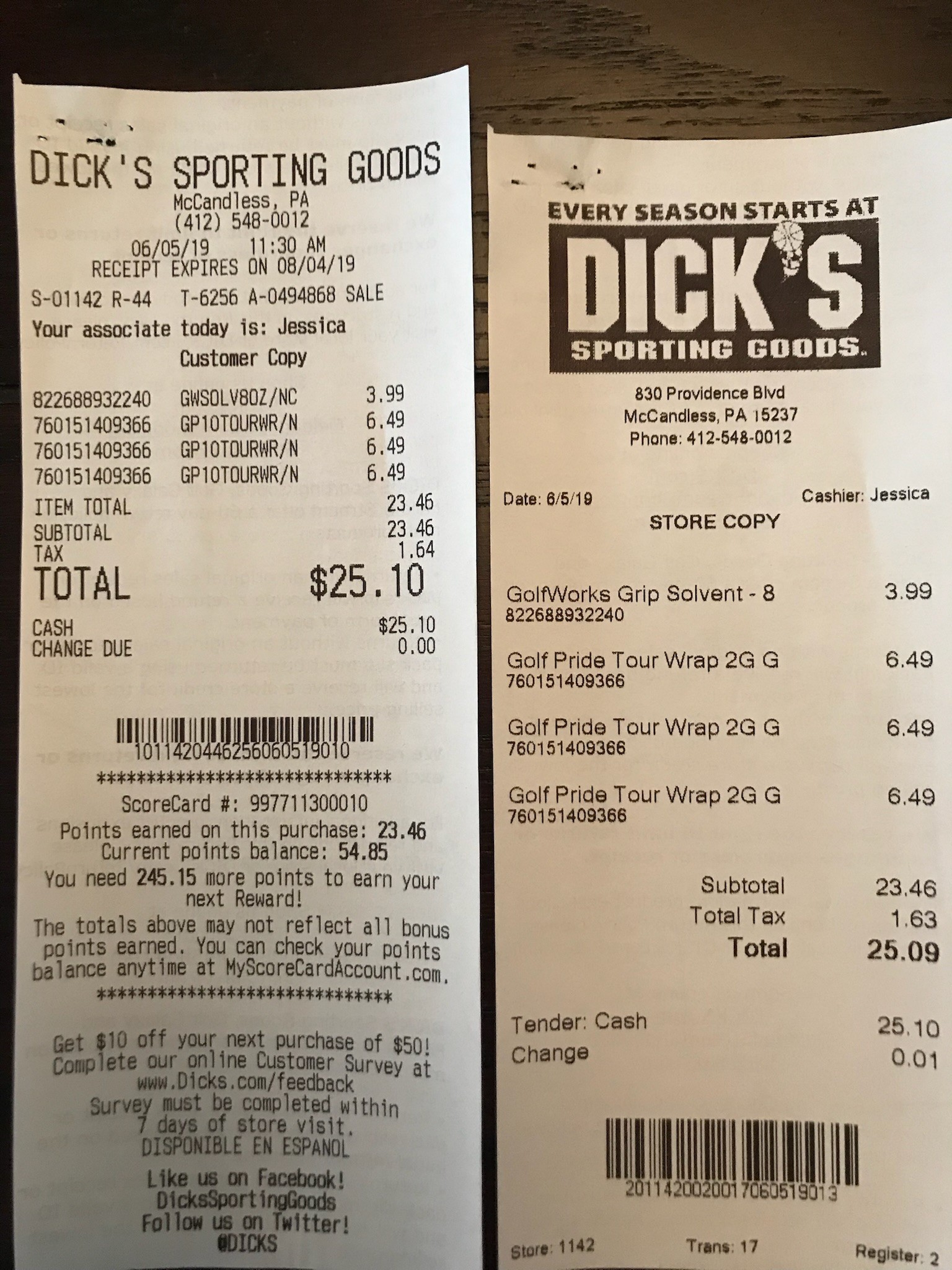
Additional impact: Receipt redesign reduced paper usage by 25%. Marketing can now measure promotion effectiveness in real-time. Store operations can verify product details at point of sale, reducing pricing disputes. The system that started as a single pilot register is now the operating system for Dick's entire retail operation
Designing flexible architecture instead of replicating legacy features enabled rapid expansion. The split-screen with adaptive context wasn't just for cash sales, it became the foundation for all transactions.
Store constraints aren't visible from the office. Two weeks shadowing cashiers shaped every major design decision - from product verification needs to understanding manager override workarounds.
Framing decisions as "$106M payroll reallocation" or "1 second = $30,000" got stakeholder buy-in that "better UX" never would. Business metrics build credibility with executives.
Starting with cash sales to validate architecture, then expanding to prove flexibility, let us learn fast without business risk. Incremental beats comprehensive when you're rebuilding critical infrastructure.tle