Mobile Job Posting Simplification
Mobile Job Posting Simplification
Turning mobile from afterthought into revenue driver
Turning mobile from afterthought into revenue driver
Turning mobile from afterthought into revenue driver
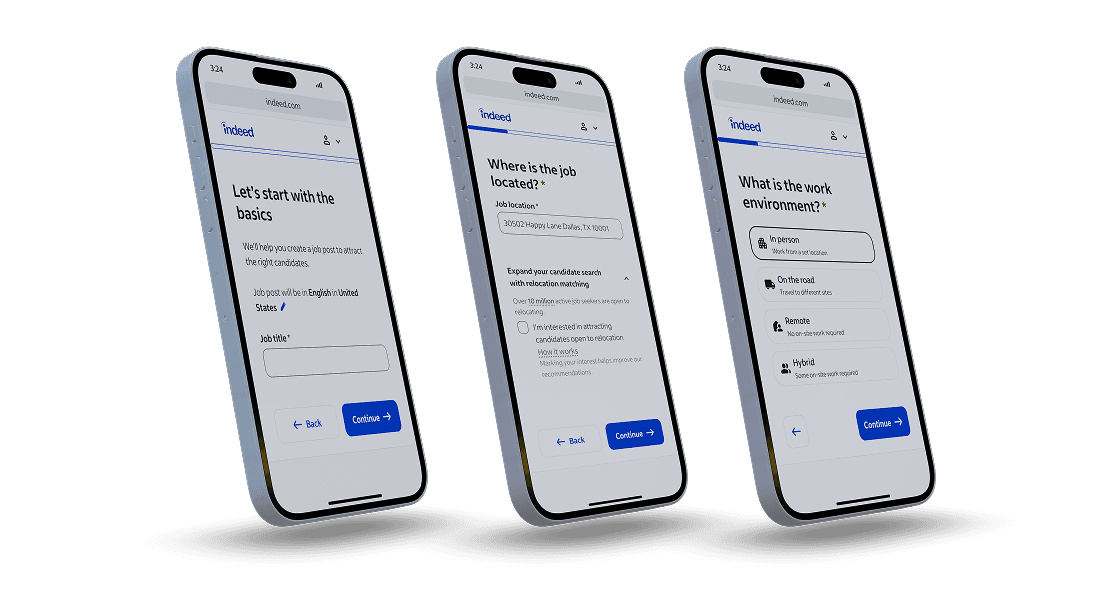
Turning Indeed's Mobile Experience into a Revenue Driver
Senior UX Designer & Strategic Lead | 2024
+4.68% completion rate | Patterns scaled company-wide
From desktop-responsive afterthought to competitive advantage - designing the mobile experience that unlocked revenue while coordinating across teams to make progress bars the company standard.
[the challenge]
The business problem
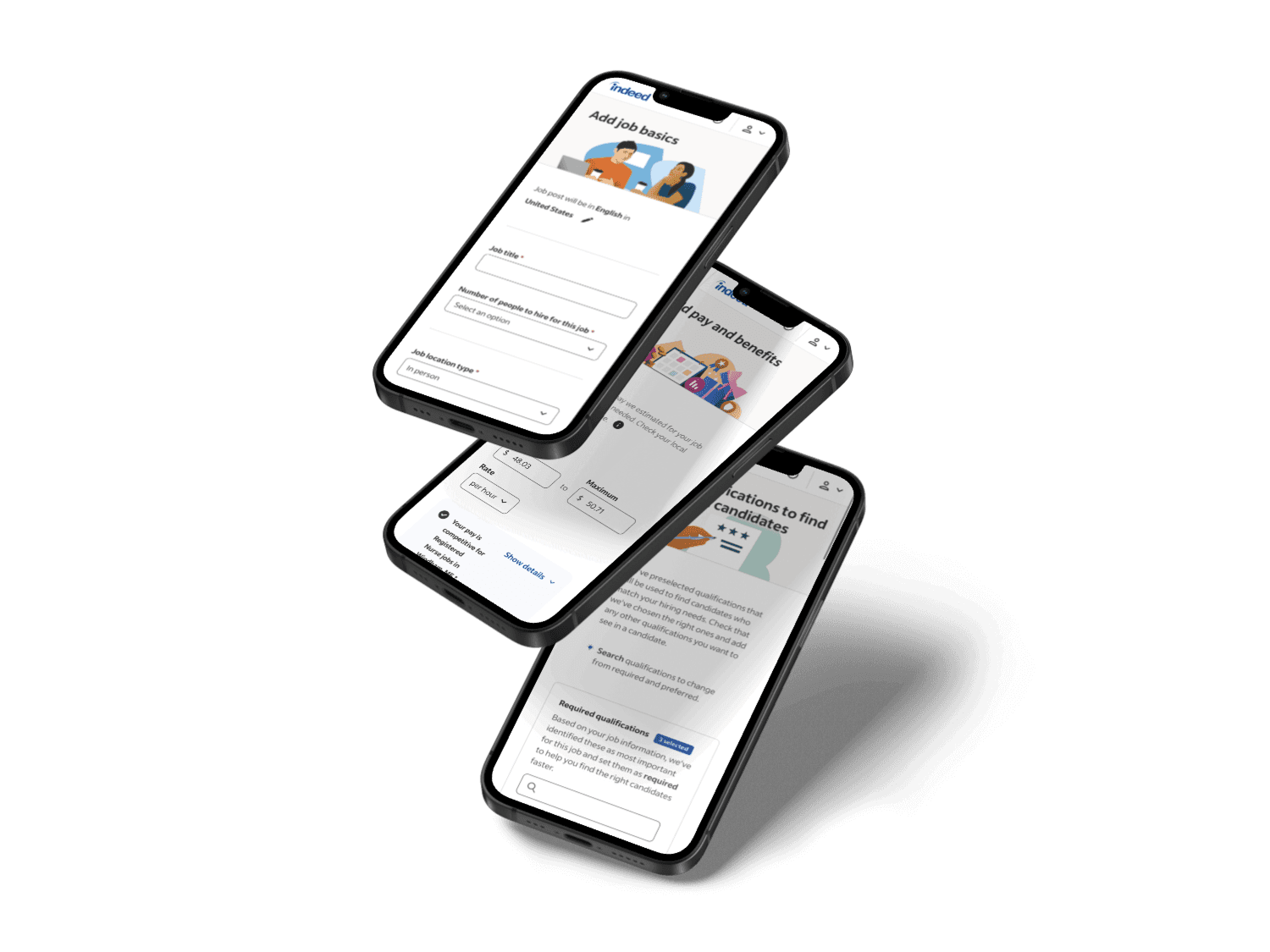
Indeed's mobile problem wasn't just about UX - it was about untapped revenue. Employers were starting job posts on their phones but abandoning at rates far higher than desktop. The desktop-responsive interface buried form fields below massive hero images, creating cognitive overload before they'd even started. I had to make it feel easier without asking for less information, and the job posting funnel crossed team boundaries - monetization owned the payment flow that came after. Any navigation patterns would require coordination across systems I didn't control.
My Role: Led research, prototyping, and cross-functional alignment. Designed a 4-phase incremental testing strategy that let us transform a core revenue product without business risk.
[research and validation]
Testing approach
I built an AI-powered interactive prototype with native mobile keyboard support and tested with 10 employers who actively post across LinkedIn, ZipRecruiter, and Glassdoor. Results: 100% completion, 100% would use again, and competitive users called it "simpler" and "less work" than alternatives. But the real insight came from watching how they interacted - they weren't confused, they were anxious. First-time small business owners worried about doing something wrong. My job became reducing anxiety, not just friction. Testing also caught one critical issue: 40% struggled with the salary slider, explicitly asking to just type instead.
Strategic approach
Most teams would redesign everything and ship it. We tested one change, validated it worked, then layered in the next. Progressive disclosure came first - one question per screen instead of multiple fields. Then sticky footers for consistent navigation. Then mobile-optimized components and killing the salary slider based on user feedback. Finally, content refinement when conversational headers created translation bloat internationally. Each phase validated assumptions before we compounded more changes. By 100% rollout, we had confidence because we'd tested each decision independently.
Turning Indeed's Mobile Experience into a Revenue Driver
Senior UX Designer & Strategic Lead | 2024
+4.68% completion rate | Patterns scaled company-wide
From desktop-responsive afterthought to competitive advantage - designing the mobile experience that unlocked revenue while coordinating across teams to make progress bars the company standard.
Phase 1
Progressive Disclosure
One question per screen, validate approach with existing components
Phase 2
Navigation Patterns
Sticky footers that collapse and expand on scroll
Phase 3
Mobile Optimization
Large tap buttons, appropriate keyboards, everything above fold
Phase 4
Content & Polish
Conversational design, simplified headers and progress bar coordination
Architecture & Strategy
Phase 1
Progressive Disclosure
One question per screen, validate approach with existing components
Phase 2
Navigation Patterns
Sticky footers that collapse and expand on scroll
Phase 3
Mobile Optimization
Large tap buttons, appropriate keyboards, everything above fold
Phase 4
Content & Polish
Conversational design, simplified headers and progress bar coordination
[research and validation]
Testing approach
I built an AI-powered interactive prototype with native mobile keyboard support and tested with 10 employers who actively post across LinkedIn, ZipRecruiter, and Glassdoor. Results: 100% completion, 100% would use again, and competitive users called it "simpler" and "less work" than alternatives. But the real insight came from watching how they interacted - they weren't confused, they were anxious. First-time small business owners worried about doing something wrong. My job became reducing anxiety, not just friction. Testing also caught one critical issue: 40% struggled with the salary slider, explicitly asking to just type instead.
Strategic approach
Most teams would redesign everything and ship it. We tested one change, validated it worked, then layered in the next. Progressive disclosure came first - one question per screen instead of multiple fields. Then sticky footers for consistent navigation. Then mobile-optimized components and killing the salary slider based on user feedback. Finally, content refinement when conversational headers created translation bloat internationally. Each phase validated assumptions before we compounded more changes. By 100% rollout, we had confidence because we'd tested each decision independently.
[design solution 01]
Progressive Disclosure
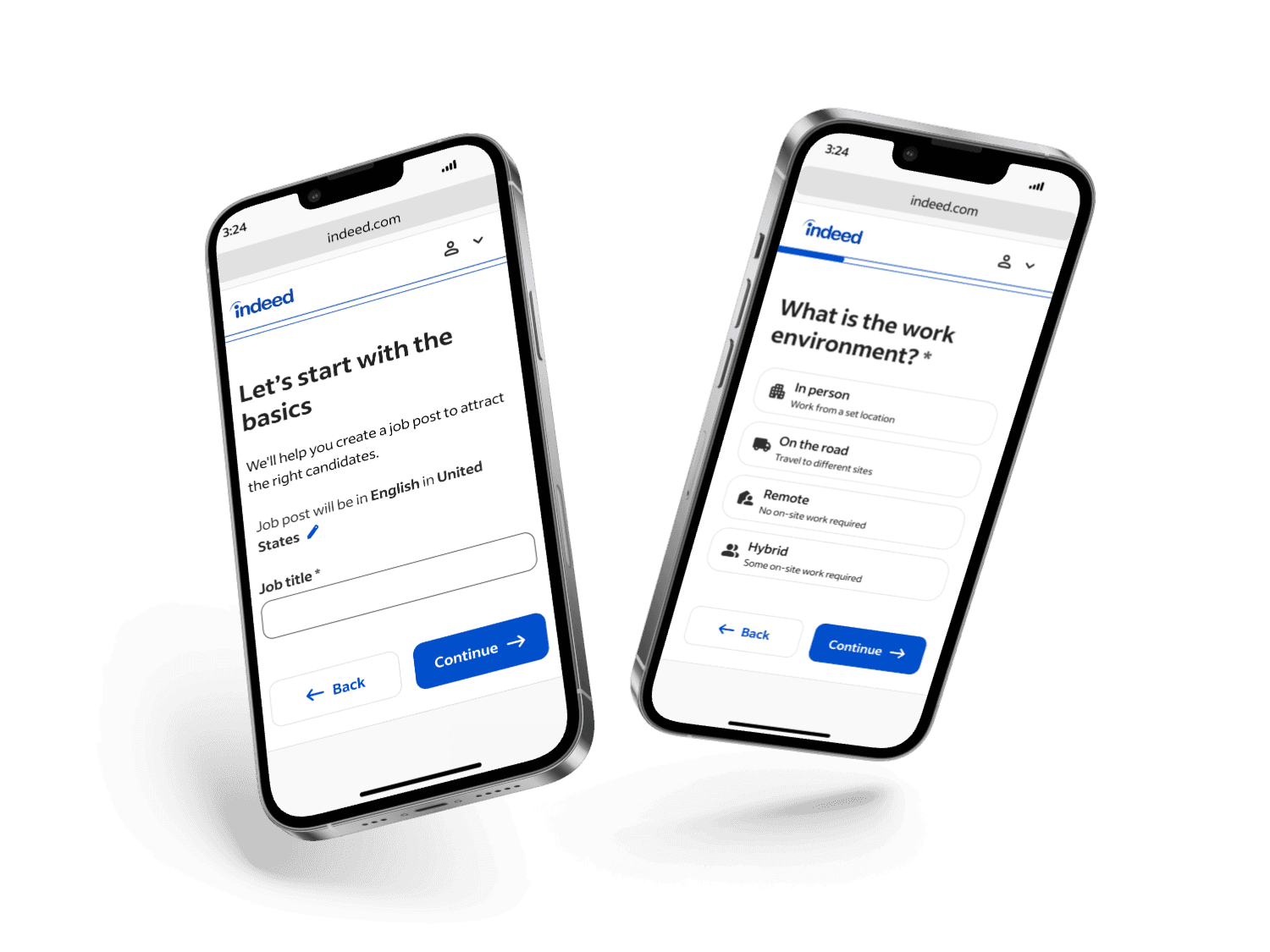
Broke the flow into discrete steps with a single focus per screen. This reduced cognitive load and made each step feel achievable. Same questions asked, but perceived complexity dropped dramatically.
[design solution 02]
Mobile-Native Inputs
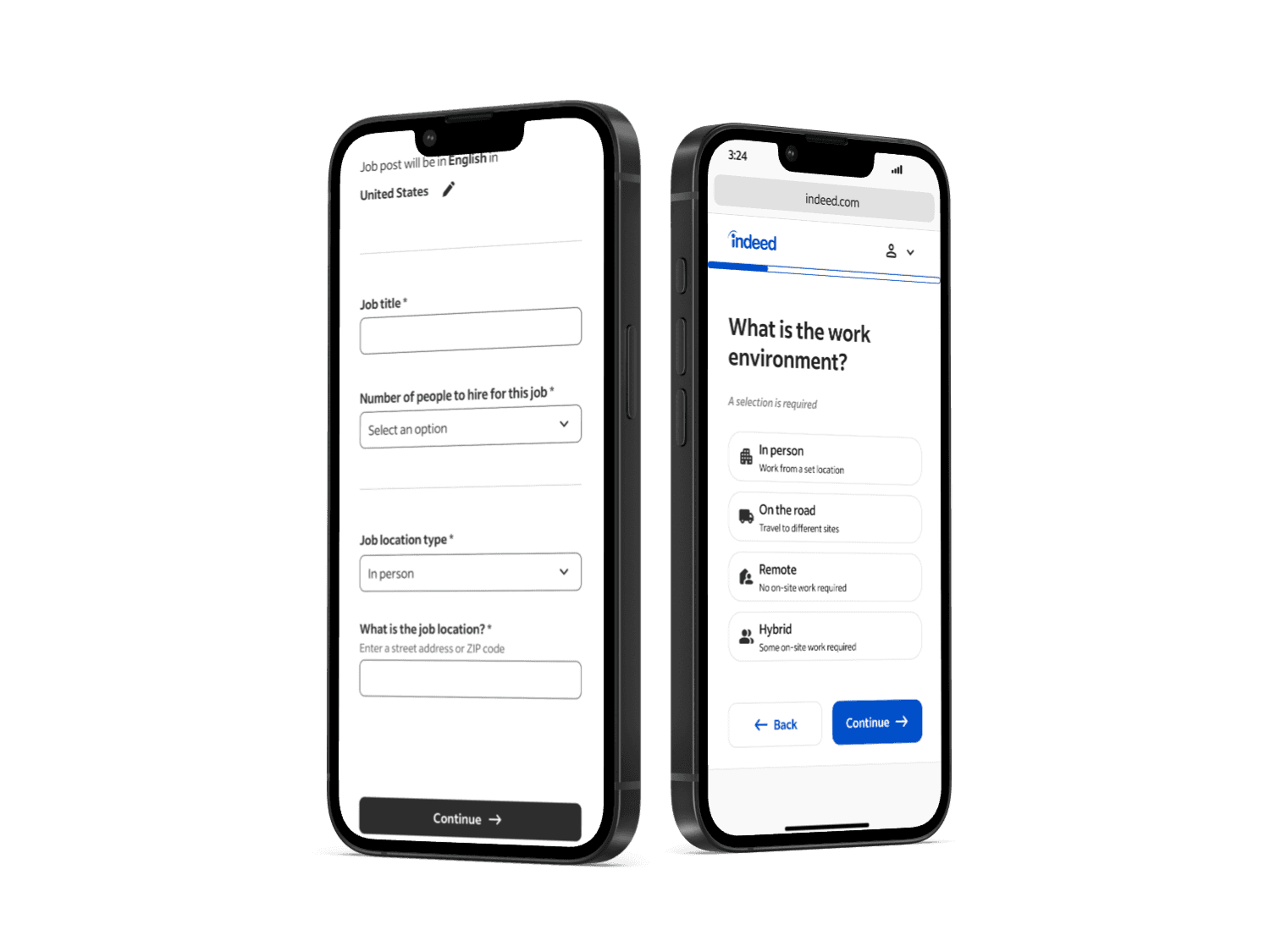
Replaced dropdown selectors with large, thumb-friendly buttons. Minimized typing. Used appropriate keyboard types. Made every interaction feel confident, not finicky.
[design solution 03]
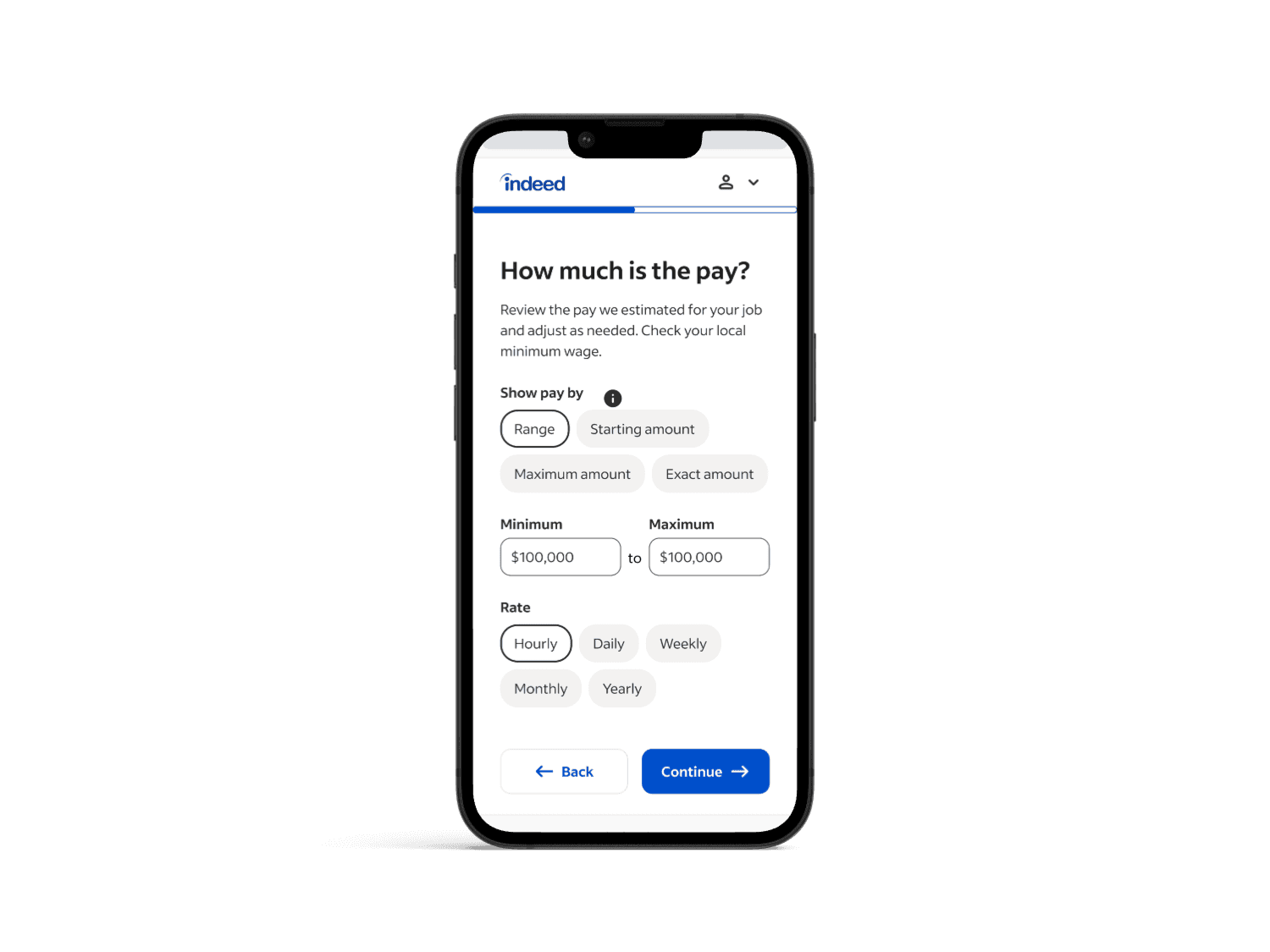
The Salary Slider Pivot
When 40% struggled with the slider, I killed it and moved to text inputs. The goal isn't beautiful solutions, it's solutions that make people feel capable.
[design solution 04]
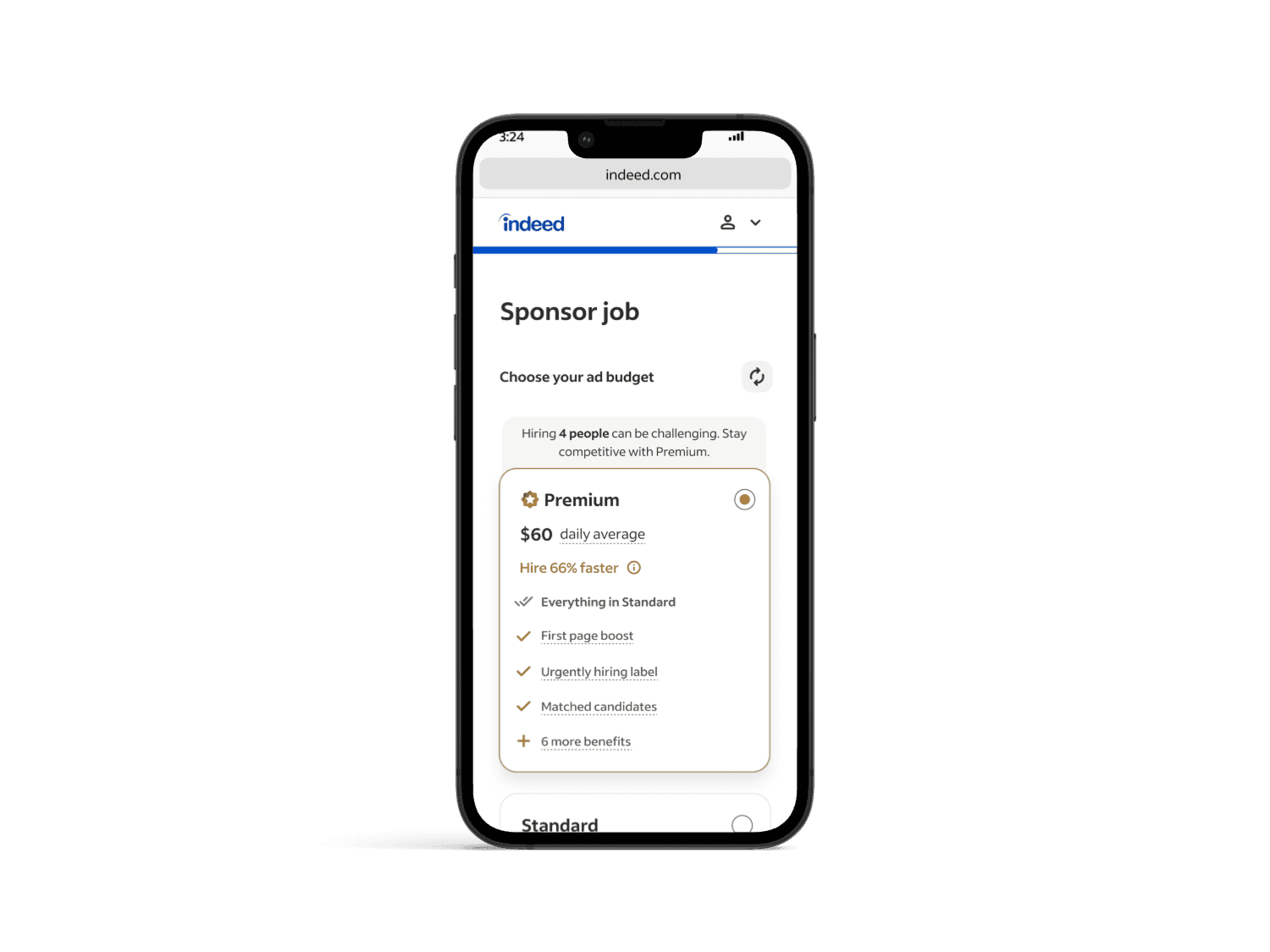
Cross-Team Progress Bar
Coordinated with monetization to create a seamless progress bar across both teams' flows.
[design solution 01]
Progressive Disclosure
Broke the flow into discrete steps with a single focus per screen. This reduced cognitive load and made each step feel achievable. Same questions asked, but perceived complexity dropped dramatically.
[design solution 02]
Mobile-Native Inputs
Replaced dropdown selectors with large, thumb-friendly buttons. Minimized typing. Used appropriate keyboard types. Made every interaction feel confident, not finicky.
[design solution 03]
The Salary Slider Pivot
When 40% struggled with the slider, I killed it and moved to text inputs. The goal isn't beautiful solutions, it's solutions that make people feel capable.
[design solution 04]
Cross-Team Progress Bar
Coordinated with monetization to create a seamless progress bar across both teams' flows.
[design solution 01]
Progressive Disclosure
Broke the flow into discrete steps with a single focus per screen. This reduced cognitive load and made each step feel achievable. Same questions asked, but perceived complexity dropped dramatically.
[design solution 02]
Mobile-Native Inputs
Replaced dropdown selectors with large, thumb-friendly buttons. Minimized typing. Used appropriate keyboard types. Made every interaction feel confident, not finicky.
[design solution 03]
The Salary Slider Pivot
When 40% struggled with the slider, I killed it and moved to text inputs. The goal isn't beautiful solutions, it's solutions that make people feel capable.
[design solution 04]
Cross-Team Progress Bar
Coordinated with monetization to create a seamless progress bar across both teams' flows.
[design solution 01]
Progressive Disclosure
Broke the flow into discrete steps with a single focus per screen. This reduced cognitive load and made each step feel achievable. Same questions asked, but perceived complexity dropped dramatically.
[design solution 02]
Mobile-Native Inputs
Replaced dropdown selectors with large, thumb-friendly buttons. Minimized typing. Used appropriate keyboard types. Made every interaction feel confident, not finicky.
[design solution 03]
The Salary Slider Pivot
When 40% struggled with the slider, I killed it and moved to text inputs. The goal isn't beautiful solutions, it's solutions that make people feel capable.
[design solution 04]
Cross-Team Progress Bar
Coordinated with monetization to create a seamless progress bar across both teams' flows.
[design solution 01]
Progressive Disclosure
Broke the flow into discrete steps with a single focus per screen. This reduced cognitive load and made each step feel achievable. Same questions asked, but perceived complexity dropped dramatically.
[research and validation]
Testing approach
I built an AI-powered interactive prototype with native mobile keyboard support and tested with 10 employers who actively post across LinkedIn, ZipRecruiter, and Glassdoor. Results: 100% completion, 100% would use again, and competitive users called it "simpler" and "less work" than alternatives. But the real insight came from watching how they interacted - they weren't confused, they were anxious. First-time small business owners worried about doing something wrong. My job became reducing anxiety, not just friction. Testing also caught one critical issue: 40% struggled with the salary slider, explicitly asking to just type instead.
Strategic approach
Most teams would redesign everything and ship it. We tested one change, validated it worked, then layered in the next. Progressive disclosure came first - one question per screen instead of multiple fields. Then sticky footers for consistent navigation. Then mobile-optimized components and killing the salary slider based on user feedback. Finally, content refinement when conversational headers created translation bloat internationally. Each phase validated assumptions before we compounded more changes. By 100% rollout, we had confidence because we'd tested each decision independently.
[design solution 01]
Progressive Disclosure
Broke the flow into discrete steps with a single focus per screen. This reduced cognitive load and made each step feel achievable. Same questions asked, but perceived complexity dropped dramatically.
[design solution 02]
Mobile-Native Inputs
Replaced dropdown selectors with large, thumb-friendly buttons. Minimized typing. Used appropriate keyboard types. Made every interaction feel confident, not finicky.
[design solution 03]
The Salary Slider Pivot
When 40% struggled with the slider, I killed it and moved to text inputs. The goal isn't beautiful solutions, it's solutions that make people feel capable.
[design solution 04]
Cross-team Progress Bar
Coordinated with monetization to create a seamless progress bar across both teams' flows.
The Roll Out
The Roll Out
US Testing
US Testing
Incremental dial-up
1% → 10% → 50% → 100%
Caught logging issues early at 1%
Result: +4.68% completion rate
International
International
Validated patterns held globally
Same phased rollout approach
Result: +6.70% first job completion rate (INTL)
Scaling beyond
Scaling beyond
Progress bar became cross-team template.
Result: Mobile standard across Indeed
+4.68%
+4.68%
Mobile completion rate
Mobile completion rate
+0.77%
+0.77%
Billing conversion increase
Billing conversion increase
+6.70%
+6.70%
First job completion (INTL)
First job completion (INTL)
Key Learnings
Key Learnings
Building trust is as important as reducing friction
Building trust is as important as reducing friction
Small business owners needed confidence, not just efficiency. Design for emotional state, not just task completion.
Cross-functional influence requires removing barriers
Cross-functional influence requires removing barriers
Make your ideas easy to adopt. Solve others' problems before asking for buy-in.
De-risking through incremental testing is strategic
De-risking through incremental testing is strategic
Learn fast, fail small. Validate assumptions before compounding changes.
Know when to hold ground vs. adapt
Know when to hold ground vs. adapt
Find alternative paths to achieve the same goal within constraints. Can't keep conversational headers? Design for trust another way.